
Mauritius is one of the most sought-after island destinations in the Indian Ocean. With turquoise lagoons, warm water year-round, and luxury beachfront resorts, it attracts honeymooners, families, and couples planning special holidays. Because the island has a tropical climate, many travellers researching their trip start with the same question: what is the best time to visit Mauritius?
Understanding the best time to visit Mauritius helps travellers plan around weather conditions, travel seasons, and pricing. While Mauritius is a year-round destination, the experience can differ depending on rainfall, humidity, and seasonal demand. That’s why researching Mauritius weather by month and the broader Mauritius travel seasons can make a big difference when choosing the right time for your trip.
This guide explains the best time to visit Mauritius by looking at the island’s climate patterns, seasonal trends, and how travel demand shifts throughout the year.
Mauritius has a tropical maritime climate with two main travel seasons: summer and winter. Understanding Mauritius climate by month helps travellers decide when conditions will best suit their holiday preferences.
The summer months bring warmer temperatures and higher humidity. Daytime temperatures often range between 27°C and 33°C. This is when the island’s tropical vegetation is lush and vibrant, and the sea is warm for swimming and snorkelling.
However, summer is also the wetter part of the year. Short tropical showers are common, especially in the afternoons, though they rarely last long enough to disrupt an entire day. Cyclone activity in the region can also occur during these months, although direct hits are relatively rare.
Winter in Mauritius is milder, cooler, and generally drier. Temperatures range from around 20°C to 26°C during the day, making it comfortable for outdoor activities such as hiking, sightseeing, and exploring the island.
Many travellers consider this period the best time to visit Mauritius because of the lower humidity and stable weather patterns. The southeast trade winds can make certain coastal areas breezier during winter, but overall conditions remain excellent for beach holidays.
Looking at Mauritius weather in January – December provides a clearer picture of how travel conditions evolve throughout the year.
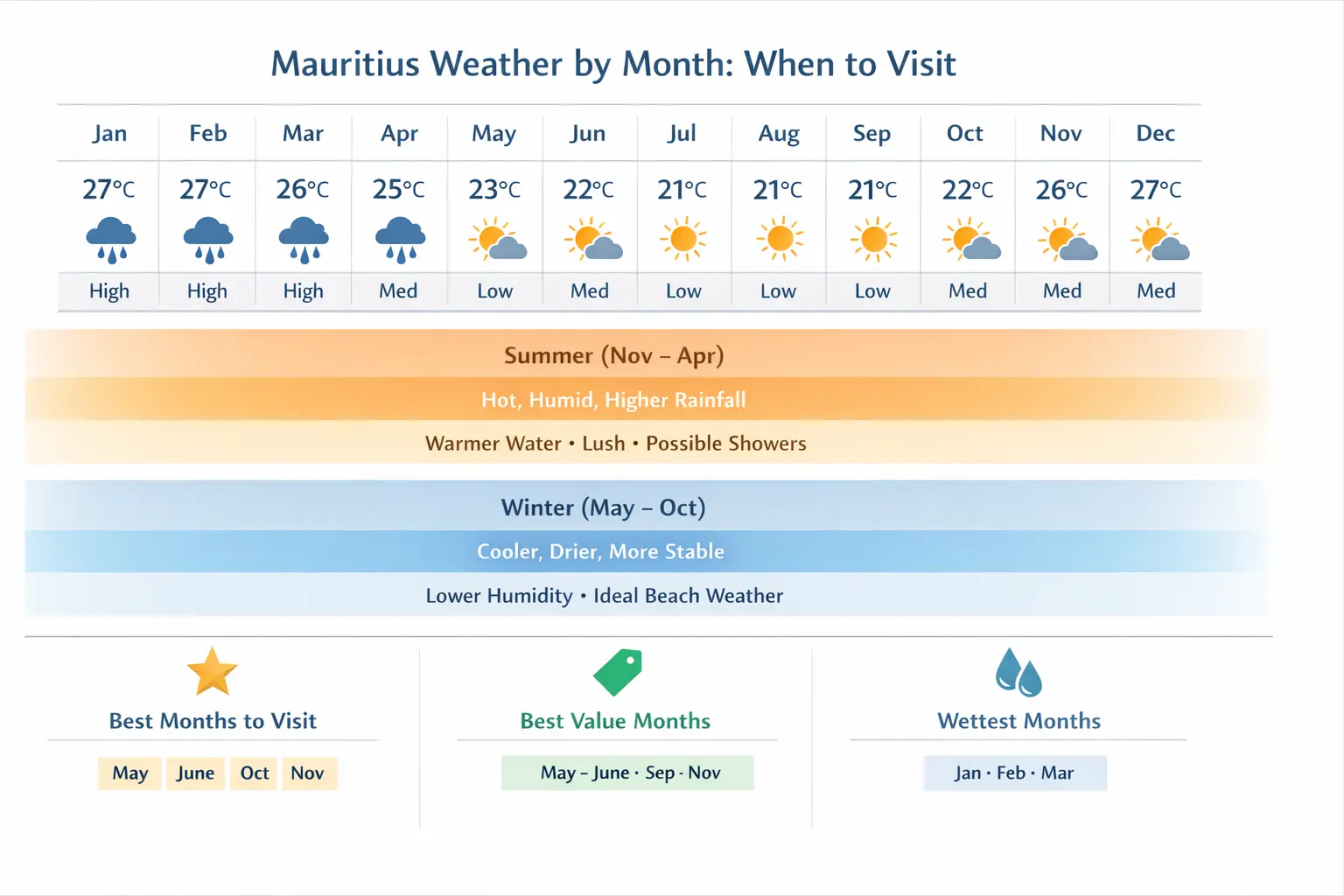
These months are the hottest and most humid on the island. Afternoon showers and occasional tropical storms can occur. While this period is still popular for holiday travel, it also overlaps with the regional cyclone season.
Despite this, many visitors still travel during this time because resorts remain warm and tropical, and prices can sometimes be lower than peak winter months.
April marks the transition into the cooler, drier season. Humidity begins to drop and rainfall decreases significantly.
For many travellers, this period becomes one of the best times to visit Mauritius because the weather is pleasant and crowds are smaller than during the European holiday peak.
These are the coolest months on the island. Daytime temperatures remain comfortable, and rainfall is generally low. Trade winds can be stronger along the eastern coast, which is something travellers should consider when choosing accommodation.
A light cardigan or sweater comes in handy for the cooler evenings. For those who prefer a warmer swim, your travel specialist can suggest resorts with heated pools, which are especially beneficial on the more breezy east coast.
Still, for many visitors, July through September represents a very reliable window for beach holidays and outdoor exploration.
These months gradually warm up again as Mauritius moves back toward the summer season. Rainfall remains relatively low in October and November, which many travellers consider the best time to visit Mauritius for a balance of warm temperatures and stable weather.
December becomes busier as international holiday travel increases.
Travel costs in Mauritius vary significantly throughout the year depending on demand, school holidays, and international travel patterns.
The cheapest time to visit Mauritius usually falls during the shoulder months between peak travel periods. These often include:
During these months, travellers can often find excellent deals on flights and accommodation. Resorts may also offer added incentives such as complimentary upgrades, meal plans, or honeymoon bonuses.
If saving money is a priority, it’s worth reading about the Cheapest Time of Year to Book Mauritius Holiday Packages to understand how pricing cycles work and when travel agents release their best deals.
Because the island remains warm throughout the year, travelling slightly outside peak season can offer excellent value without sacrificing the experience.
One topic that often concerns travellers researching the best time to visit Mauritius is the island’s cyclone season.
Cyclones in the region generally occur between January and March. However, it’s important to understand that the presence of a cyclone season does not mean the island is constantly affected by storms.
Most years, Mauritius experiences only a few tropical disturbances, and direct cyclone impacts are relatively uncommon. Resorts and infrastructure are well prepared for severe weather events, and travel providers monitor conditions closely.
It’s also wise to consider travel insurance during this period especially. Disruptions, such as airport closures or missed connections, could result in extra nights’ accommodation or other unexpected costs. Be sure to check the policy details carefully and discuss coverage with your provider to ensure you’re fully protected.
For a realistic overview of potential disruptions and how travellers can prepare, it’s helpful to understand the Mauritius Weather Risks that can occasionally affect travel plans.
In most cases, the island’s weather remains favourable even during the wetter months.
While Mauritius is a year-round destination, certain months consistently stand out as the best time to visit Mauritius depending on the type of holiday travellers want.

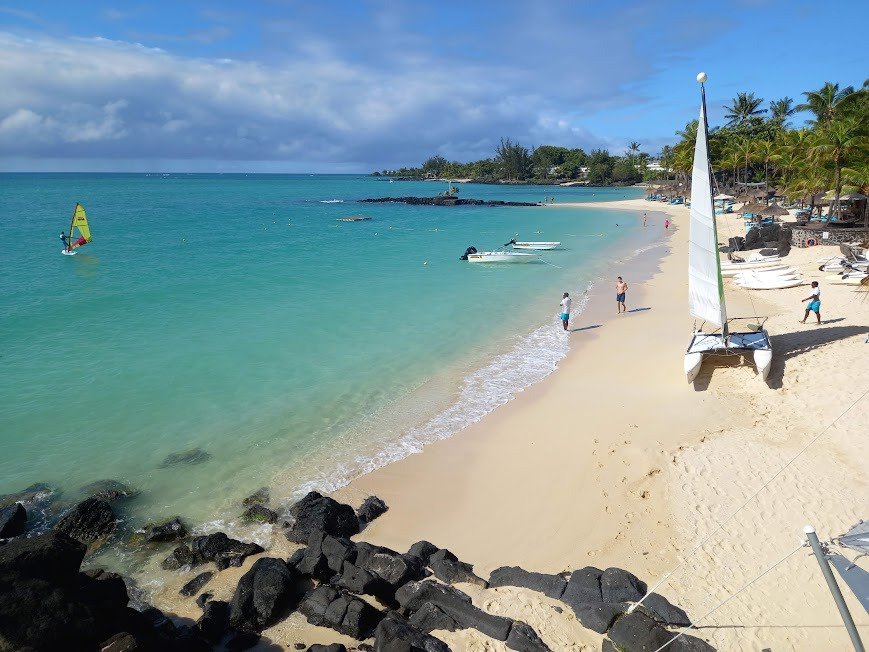
May through November is often considered the best time to visit Mauritius for beach conditions. Lower humidity, comfortable temperatures, and calmer weather create ideal conditions for swimming, snorkelling, and relaxing on the beach.
Many couples choose April, May, October, and November for honeymoons. These months combine warm weather with fewer crowds and excellent resort availability.
The balance of sunshine and manageable temperatures makes these months particularly appealing for romantic island escapes.
Budget-focused travellers may find the best time to visit Mauritius during the shoulder periods when tourism demand dips slightly. Prices often drop outside peak European holidays and the festive season.
Travelling during these quieter months can result in significant savings while still enjoying beautiful beaches and warm ocean temperatures.
Ultimately, the best time to visit Mauritius depends on what matters most to each traveller.
If you prioritise stable weather and cooler temperatures, the winter months from May to October may be ideal. If you prefer warmer tropical conditions and potentially lower travel prices, the summer season may suit you perfectly.
Because Mauritius remains warm and welcoming throughout the year, travellers can plan unforgettable holidays during almost any month.
If you’re planning a trip, explore our range of Mauritius Packages and get in touch. I’ll help you choose the right travel dates, resorts, and experiences to suit your ideal island escape.

I’m Kerstin, founder of Islandwize Travel. With many years in the travel industry and more than 30 visits to Mauritius, I share first-hand knowledge and expert advice on Indian Ocean getaways. I help South Africans travel with confidence, guided by my motto: “Nothing is ever too much trouble.” Let’s plan your dream island holiday together.
Share this page!
WhatsApp us